lunes, 21 de enero de 2013

ST. PATRICK´S DAY


              March 17th is St. Patrick´s Day. This is Ireland´s most important national holiday, but it is also a special day for Irish people living throughout the world. On St. Patrick´s Day, people of Irish descent wear the colour green. This is the national colour of Ireland. It is the colour of the shamrock, the plant with three leaves on a single stem. The shamrock is a symbol of Ireland and St. Patrick´s Day.


 In many cities, St. Patrick´s Day is celebrated with parades, dances, and festive dinners. People greet each other with good wishes and often send cards to each other. Many stores are filled with green decorations and cakes and candies are often decorated with the colour green. Some restaurants and pubs even sell green beer!

 
But WHO WAS ST. PATRICK?
                   St. Patrick was born at the end of the 4th century in Britain. When he was 16, he was kidnapped from his home by a group of Irish pirates and taken to Ireland. There, he was sold as a slave and had to work for the next six years as a shepherd. When Patrick was living in Ireland as a slave, he had a very lonely life and he turned to religion for comfort. After six long years of slavery, at the age of 22, he escaped to France and began to study the Bible. Later he became a priest and decided to return to Ireland to convert the people to Christianity. He was a brave man and people admired him. He travelled all over the country setting up schools and churches for the Irish people. He also worked very hard to develop a strong national spirit in the country.
                There are many stories about him. The most famous one is that he drove all the snakes out of Ireland. That is why there aren´t any snakes in Ireland today.
He died on March 17th, 461. Ever since his death, March 17th has been celebrated as St. Patrick´s Day. It is  an important day for the Irish because it celebrates the conversion of Ireland to Christianity. Nowadays, it is also a special day to celebrate one´s Irish traditions and to have fun.

jueves, 21 de junio de 2012

DIAMOND JUBILEE

On June 2nd, ESO 32 and 43 students celebrated Queen Elizabeth´s Diamond Jubilee. They made a  "street party" and prepared a selection of tasty English sandwiches (Cucumber,Pilchard,Cheddar Cheese,Tuna,Egg Crest sandwiches), which they ate in no time!. It was a great experience! We had decorated Edu´s bar with drawings and English flags. Everybody was dressed in blue, red and white and you can tell from the photographs we really had a great time. Thanks kids...you really are THE BEST!  Oopps! I almost forgot...Long Live the Queen!


martes, 29 de mayo de 2012

BRINGING ART INTO LIFE

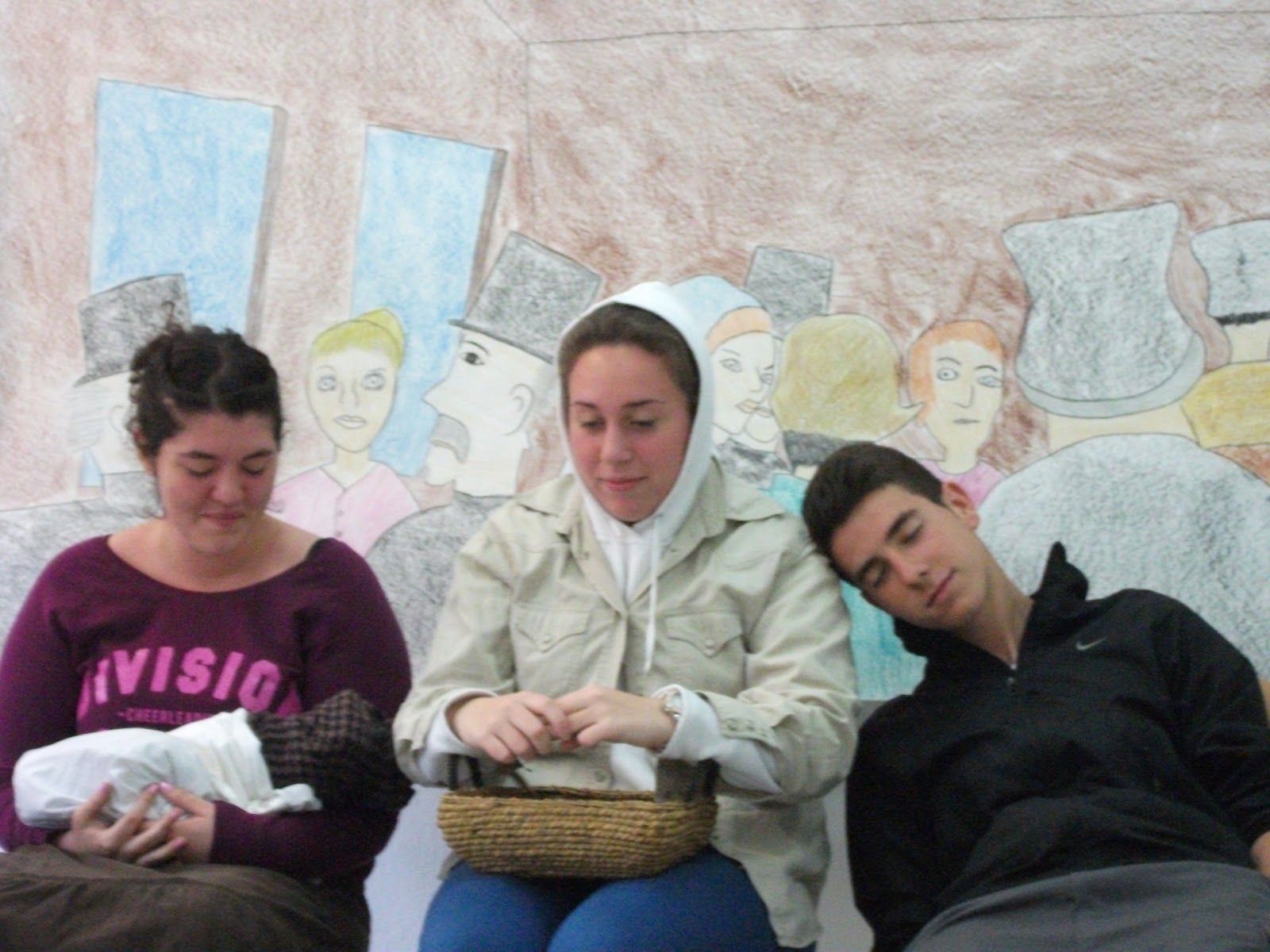
Students from Bachillerato brought some masterpieces into life on May 10th. This was part of their project on Realism and the nineteenth century. They studied the works of art and showed how the artists portrayed the society of their times. Pupils really got into it and enjoyed the experience! We will try to improve it for next year. Here are some examples:
The Angelus (1857-59)
Jean F. Millet
Museum D´Orsay, Paris.


The Stonecutters (1849)
Gustave Courbet
Gemäldegalerie, Dresde


The third-class wagon (1862)
Honoré Daumier


Thanks to you all for your collaboration! Many thanks to Rafael Muñoz for his enthusiasm and hard work.

lunes, 28 de mayo de 2012

VICTORIAN DAY


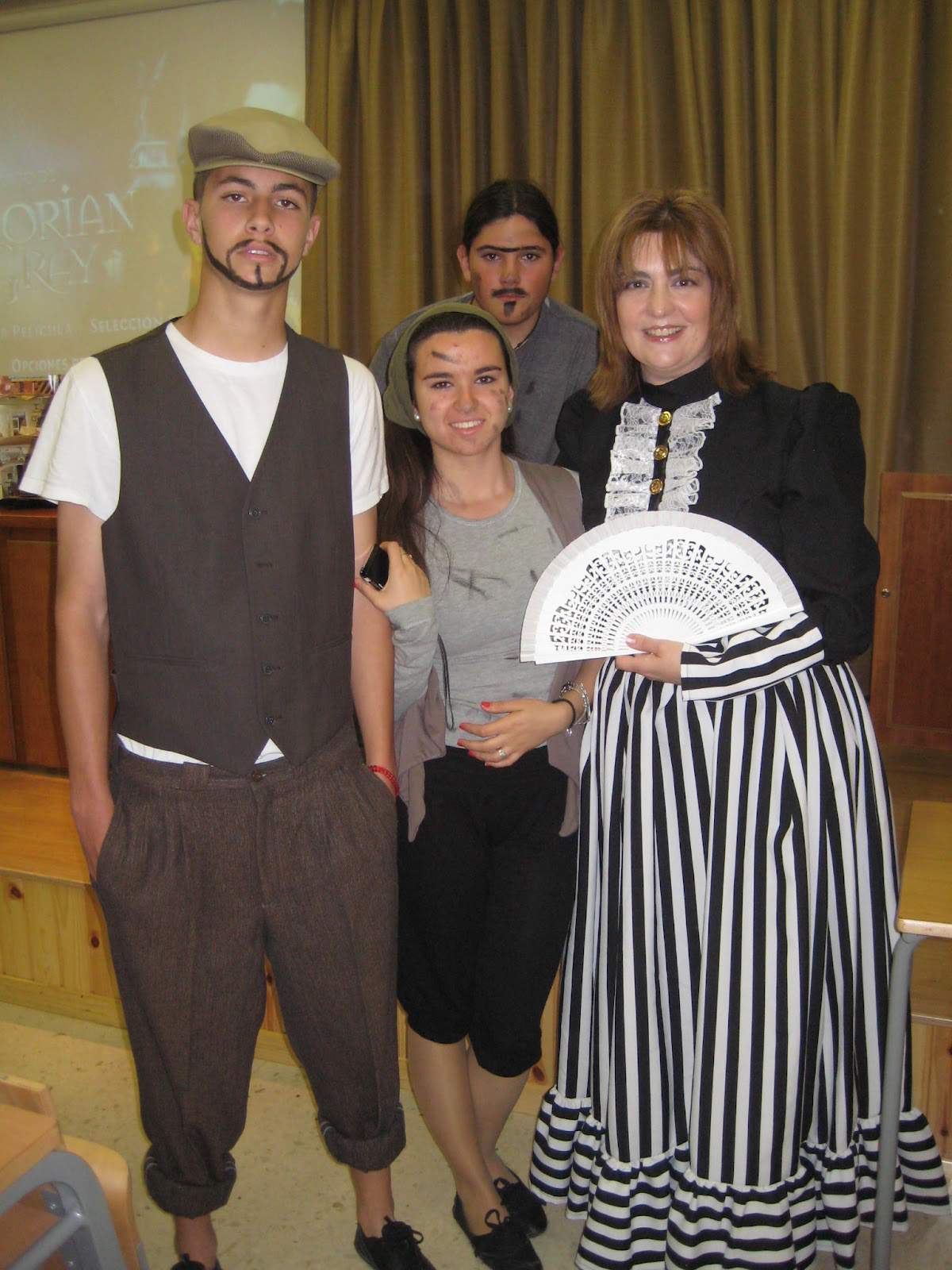
On May 2nd, students from ESO41 and 43 celebrated a Victorian day at school. ESO 41 students showed in their powerpoints how much they have learnt about this topic. They dealt with all the points that appear below on this blog. ESO 43 pupils dressed up following the Victorian fashion, We all had a great time!


martes, 21 de febrero de 2012

CHARLES DICKENS AND THE VICTORIAN AGE


                                         THE   VICTORIAN   AGE
         
          In 1897 Mark Twain was visiting London during the Diamond Jubilee celebrations honoring the sixtieth anniversary of Queen Victoria's coming to the throne. "British history is two thousand years old," Twain observed, "and yet in a good many ways the world has moved farther ahead since the Queen was born than it moved in all the rest of the two thousand put together." Twain's comment captures the sense of dizzying change that characterized the Victorian period. Perhaps most important was the shift from a way of life based on ownership of land to a modern urban economy based on trade and manufacturing. By the beginning of the Victorian period, the Industrial Revolution, as this shift was called, had created profound economic and social changes, including a mass migration of workers to industrial towns, where they lived in new urban slums. But the changes arising out of the Industrial Revolution were just one subset of the radical changes taking place in mid- and late-nineteenth-century Britain — among others were the democratization resulting from extension of the franchise; challenges to religious faith, in part based on the advances of scientific knowledge, particularly of evolution; and changes in the role of women.


All of these issues, and the controversies attending them, informed Victorian literature. In part because of the expansion of newspapers and the periodical press, debate about political and social issues played an important role in the experience of the reading public. The Victorian novel, with its emphasis on the realistic portrayal of social life, represented many Victorian issues in the stories of its characters. Moreover, debates about political representation involved in expansion both of the franchise and of the rights of women affected literary representation, as writers gave voice to those who had been voiceless.

QUEEN VICTORIA

QUEEN VICTORIA
Victoria became queen in 1837 at the age of eighteen and ruled for 64 years, longer than any other British Monarch, giving her name to the Victorian Age. The British loved her because she was an intelligent, dedicated and responsible queen, who was interested in all aspects of British life. Queen Victoria married Prince Albert, her great love, and was a devoted wife and mother of nine children. Family values and morality were extremely important to Victoria and Albert, and they were able to set an example which the people followed. When Victoria died, in 1901, the nation mourned the loss of a popular and respected queen.

BRITISH EMPIRE

The British Empire became the largest empire in the world, covering one fifth of the earth´s land surface, with a population of about 370 million people. Queen Victoria ruled over Canada, Australia, New Zealand, India, Burma, large parts of Africa, Singapore, Malaysia, parts of Indonesia, Borneo and New Guinea. The British Empire created trade and wealth for millions of people, although there were rebellions against British rule in the colonies, such as the Indian Mutiny of 1857. During the 1850s British soldiers fought in the Crimean War on the Black Sea, which was the first war to be photographed.